🥾 1. Waterproof Construction: The #1 Priority
Hunting often involves wet environments such as marshes, forests, and snow. Therefore, waterproof performance is non-negotiable.
Key Technologies:
- One-piece molded construction
- High-frequency welded seams
- Seam sealing reinforcement
Testing Standards:
- Water immersion testing
- High-pressure spray testing
👉 Buyer Insight:
Most leakage issues occur at seams or bonding areas, not the material itself.
🧵 2. Material Selection: The Foundation of Performance
The choice of material directly affects durability, flexibility, and comfort.
Natural Rubber
- Excellent flexibility
- Long-lasting durability
- Best for premium hunting boots
Neoprene
- Superior insulation
- Maintains flexibility in cold weather
- Ideal for winter hunting
EVA / PU Components
- Lightweight cushioning
- Shock absorption
👉 Best Combination:
Natural rubber outer + neoprene lining = optimal performance in cold and wet environments.
🥶 3. Insulation & Cold Resistance
Cold-weather hunting requires boots that can maintain warmth without sacrificing flexibility.
Key Indicators:
- Thermal rating up to -30°C
- Multi-layer lining structure
- Moisture-wicking inner materials
👉 Low-quality boots often become stiff and uncomfortable in freezing temperatures.
🪵 4. Grip & Traction: Safety in Every Step
Hunting terrain can be slippery, muddy, or uneven.
High-Performance Features:
- Deep lug outsole design
- Anti-slip rubber compounds
- Friction coefficient > 0.5
Terrain Types:
- Mud → deep lugs
- Snow → wide spacing
- Wet rocks → soft rubber grip
👉 Poor traction is one of the leading causes of outdoor injuries.
🔄 5. Durability & Flex Resistance
Hunting boots must withstand repeated bending and harsh use.
Key Standards:
- 100,000 flex cycles without cracking
- Reinforced stress points
- Strong bonding between sole and upper
👉 Weak bonding leads to sole separation—a common issue in low-cost boots.
🎯 6. Comfort & Fit for Long Hunting Trips
Comfort directly affects user performance during long hours outdoors.
Important Factors:
- Ergonomic design
- Cushioning support
- Breathability
- Proper sizing consistency
👉 Buyers should always request size charts and fitting samples.
🧪 7. Quality Control & Certifications
Reliable manufacturers follow strict quality standards.
Common Certifications:
- ISO 9001
- CE
- ISO 20345 / 20347
Inspection Process:
- Raw material testing
- In-line production checks
- Final waterproof testing
⚠️ 8. Common Problems in Low-Quality Hunting Boots
Avoid suppliers whose products show these issues:
- Water leakage after short use
- Cracking in cold weather
- Poor grip on wet surfaces
- Inconsistent sizing
👉 These problems usually result from poor materials and weak manufacturing processes.
🏭 9. How to Choose the Right Hunting Boot Manufacturer
For brands and importers, selecting the right supplier is critical.
Key Evaluation Criteria:
Production Capacity
- Stable output (e.g. 2,000+ pairs/day)
OEM/ODM Capability
- Custom design support
- Mold development
Quality Control
- In-house testing equipment
- Clear inspection standards
Communication
- Fast response
- Clear technical understanding
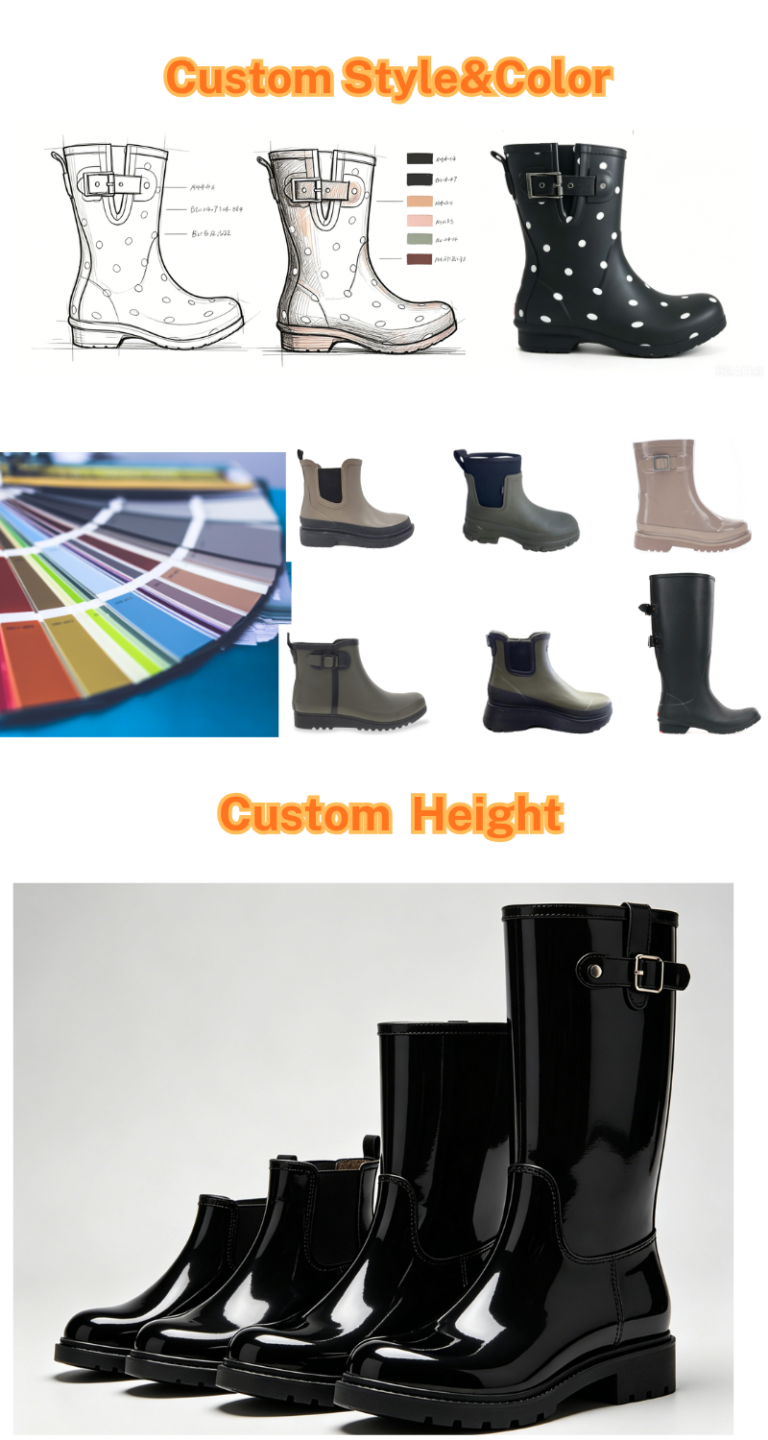
📦 10. Customization Options for Hunting Boots
Professional manufacturers typically offer:
- Custom logo branding
- Color and material options
- Outsole pattern design
- Packaging solutions
👉 Customization helps brands stand out in competitive markets.
📈 Conclusion
High-quality hunting boots are defined by a combination of:
- Waterproof construction
- Durable materials
- Reliable insulation
- Strong grip and traction
- Strict quality control
For businesses, investing in the right manufacturer ensures better product performance, fewer complaints, and stronger brand reputation.
📞 Call Us
Looking for a Trusted Hunting Boot Manufacturer?
We support:
- OEM & ODM customization
- Low MOQ for new brands
- Fast sampling (7–15 days)
- Stable bulk production
👉 Contact us today for product catalogs and quotations.
❓ FAQ Section
Q1: What are the best hunting boots for cold weather?
Boots with neoprene lining and thermal ratings up to -30°C are ideal for cold environments.
Q2: Are rubber hunting boots better than leather boots?
Rubber boots offer better waterproof performance, while leather boots provide breathability. The choice depends on usage conditions.
Q3: How do I know if hunting boots are high quality?
Check for waterproof construction, strong grip, cold resistance, and certified manufacturing standards.