🏭 1. What Are Rubber Boots Made Of?
The performance of rubber boots depends heavily on the materials used. Below are the most common options:
Natural Rubber
- Excellent flexibility and durability
- Superior waterproof performance
- Ideal for premium hunting and outdoor boots
👉 Pro Tip for Buyers:
If your market is Europe or North America, natural rubber + neoprene lining is the most competitive combination.
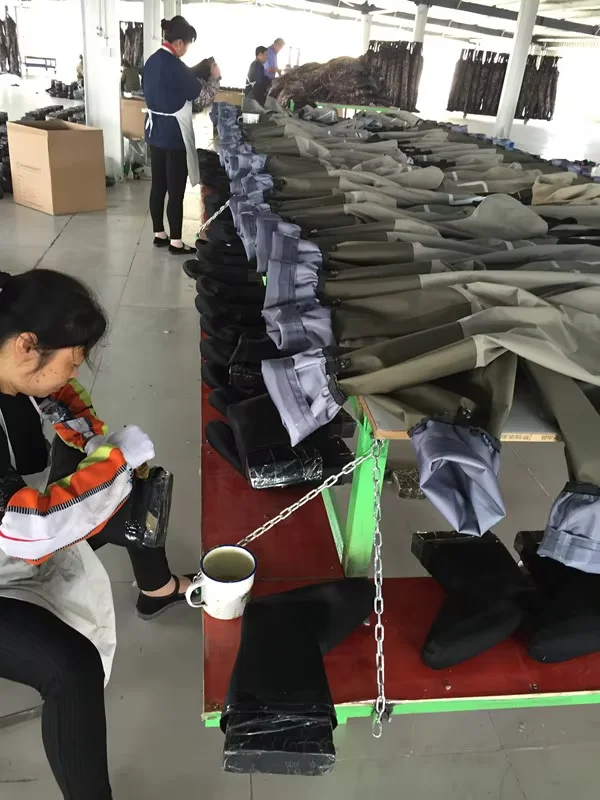
⚙️ 2. Rubber Boot Manufacturing Process (Step-by-Step)
Understanding the production process helps you evaluate factory capabilities.
Step 1: Design & Pattern Making
- Product structure design
- Mold development
- Size grading
Step 2: Material Preparation
- Rubber mixing
- Chemical formulation
- Sheet or liquid preparation
Step 3: Upper Construction
- Hand-lasted or molded
- Layer bonding
- Reinforcement at stress points
Step 4: Sole Attachment
- Integrated molding or adhesive bonding
- Anti-slip outsole design
Step 5: Vulcanization
- High-temperature curing process
- Enhances strength and elasticity
Step 6: Finishing & Assembly
- Trimming
- Logo printing
- Lining insertion
💧 3. How Waterproof Rubber Boots Are Made
Waterproof performance is the most critical feature.
High-quality manufacturers use:
- High-frequency welding
- Seam sealing technology
- One-piece molding construction
Testing Methods:
- Water immersion test
- Pressure spray test
- Flex testing (up to 100,000 cycles)
👉 Poor-quality boots often fail at seams or bonding areas.
🧪 4. Quality Control Standards in Rubber Boot Production
Reliable factories follow strict QC procedures:
Incoming Material Inspection
- Rubber density
- Chemical compliance (REACH, RoHS)
In-Process Control
- Adhesion strength testing
- Dimensional accuracy
Final Inspection
- Waterproof testing
- Visual defect check
- Packaging verification
👉 Key Certifications to Look For:
- ISO 9001
- CE
- ISO 20345 / 20347
🥶 5. Performance Factors That Matter Most
When sourcing rubber boots, focus on these critical indicators:
| Feature | Standard |
|---|---|
| Waterproof | 100% no leakage |
| Anti-slip | Friction coefficient > 0.5 |
| Cold resistance | Up to -30°C |
| Durability | 100,000 flex cycles |
⚠️ 6. Common Problems in Low-Quality Rubber Boots
Many importers face these issues:
- Cracking in cold weather
- Sole separation
- Water leakage
- Poor sizing consistency
👉 These are usually caused by:
- Low-grade materials
- Weak bonding process
- Lack of quality control
🏢 7. How to Choose a Reliable Rubber Boot Manufacturer
Before placing an order, evaluate suppliers based on:
Factory Capability
- Production capacity (e.g. 2,000+ pairs/day)
- Number of production lines
OEM/ODM Experience
- Custom design support
- Mold development ability
Quality Assurance
- Testing equipment
- Certifications
Communication
- Response speed
- English proficiency
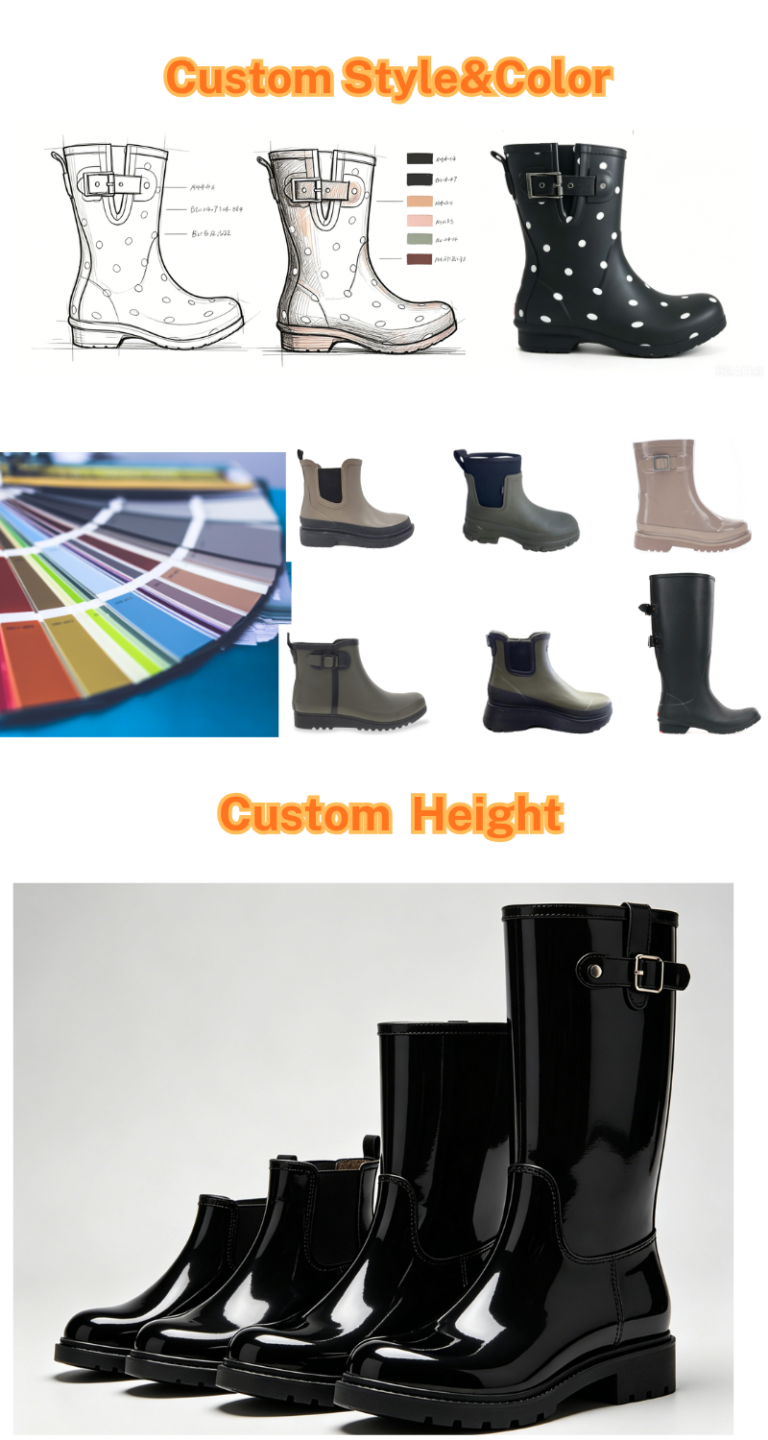
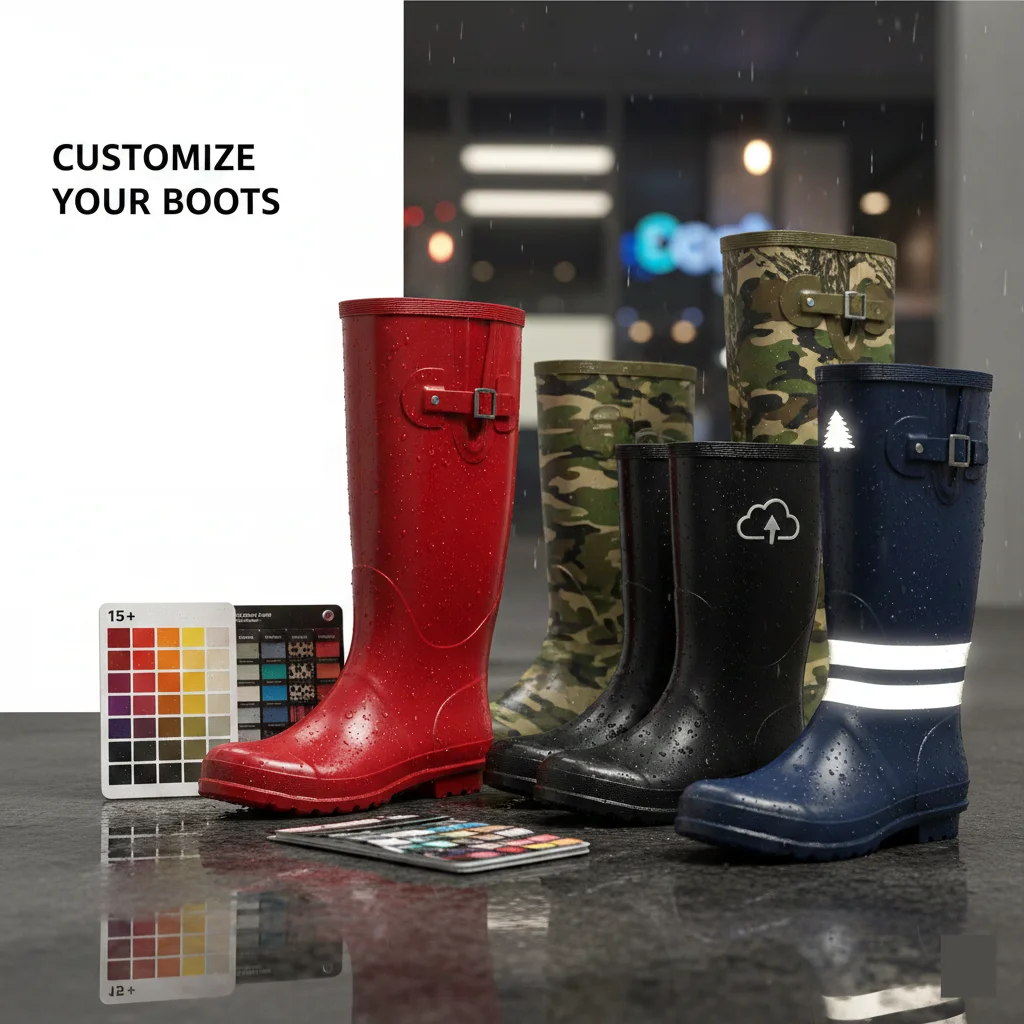
📦 8. OEM & Customization Options
Professional manufacturers typically offer:
- Logo printing
- Custom colors
- Sole pattern design
- Packaging customization
👉 OEM services are essential for building your own brand in competitive markets.
📈 Conclusion
Understanding the rubber boot manufacturing process allows you to:
- Avoid low-quality suppliers
- Improve product performance
- Build a stronger brand
If you are sourcing rubber boots for your business, working with an experienced OEM manufacturer is key to long-term success.
📞 Call to Action
Looking for a Reliable Rubber Boot Manufacturer?
We provide:
- OEM & ODM services
- Low MOQ solutions
- Fast sampling (7–15 days)
- Stable production capacity
👉 Contact us today to get a quote and product catalog.
❓ FAQ Section
Q1: What is the best material for rubber boots?
Natural rubber offers the best durability and waterproof performance.
Q2: How long do rubber boots last?
High-quality boots can last 2–5 years depending on usage.
Q3: What is MOQ for custom rubber boots?
MOQ varies by design, typically from 500–1,000 pairs.