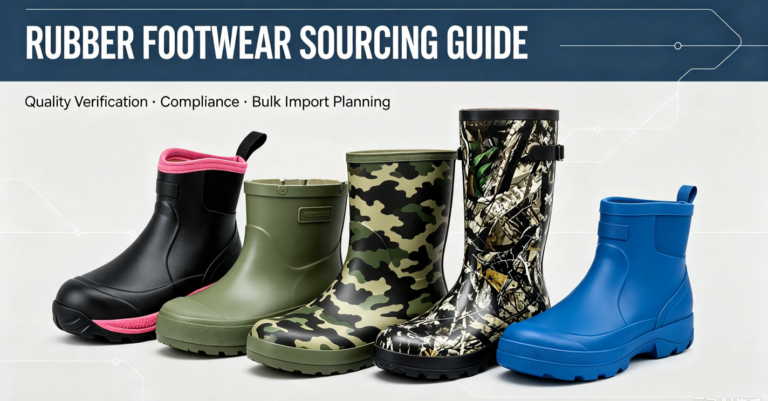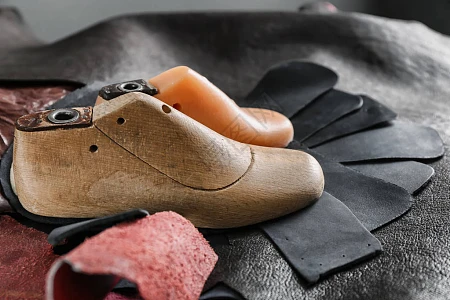
Importing boots from China is one of the most common questions we receive — and one of the most misunderstood. A buyer who gets the HS code wrong can overpay duty by 8%, pay an unexpected anti-dumping penalty, or land a container that customs refuses to release. This factory-direct guide walks through the classification, duty math and paperwork that protects your margin.
Step 1: Get the HS Code Right
The Harmonized System code determines your duty rate, and it is based on the upper material, not the outsole or the marketing. The most common headings for outdoor boots:
| HS Code (6-digit) | Description | Typical US duty |
|---|---|---|
| 6403.91 | Footwear with leather upper, covering the ankle | 8.5–10% |
| 6403.99 | Other leather-upper footwear | 8.5–10% |
| 6402.91 | Waterproof rubber/plastic upper, ankle-high | 8.5% |
| 6402.99 | Other rubber/plastic upper footwear | 8.5% |
| 6401.10 | Waterproof rubber/plastic with protective toe | 8.5% |
The exact 10-digit subheading and country-of-origin treatment (e.g. MFN vs. free trade) is what a licensed customs broker confirms. Look up the current US HTS schedule on the official USITC HTS database.
Step 2: Calculate the Real Landed Cost
A common mistake is budgeting only FOB price. The real landed cost per pair is:
FOB unit price + ocean/air freight per pair + insurance + customs duty + MPF/HMF + customs broker fee + inland trucking + warehousing.
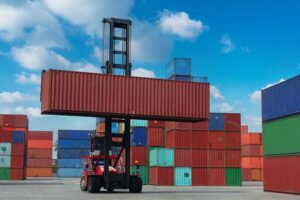
Rule of thumb for a 40HQ container of rain boots (≈ 8,000–10,000 pairs to US West Coast):
- Ocean freight: USD 4,000–8,000 per container (highly seasonal).
- Duty at 8.5% on FOB value.
- Merchandise Processing Fee: 0.3464% of declared value (capped).
- Harbor Maintenance Fee: 0.125%.
Do not skip the customs broker. A good broker costs USD 150–300 per entry and catches classification errors that cost thousands.
Step 3: Choose the Right Incoterm
For first-time buyers, FOB (Free On Board) Shanghai/Ningbo is the safest middle ground:
- The factory handles inland China transport, export customs and loading onto the vessel.
- You control the ocean carrier, insurance and import customs.
- You avoid the common factory markup on DDP (delivered duty paid), which can quietly add 12–18% to the cost.
Avoid DDP from a factory you have not worked with — “landed price” quotes often hide delayed shipments and re-inv
oicing.
Step 4: The Document Checklist
Before the container sails, you should have:
- Commercial invoice (in English, HS-coded).
- Packing list with carton dimensions and gross/net weight.
- Bill of Lading (telex release or original).
- Certificate of Origin (Form A for GSP-eligible markets, or ordinary CO).
- Test reports (REACH, ASTM, CPSIA) if required.
- FDA food-contact notice if the boot will be sold as fishery or food-service PPE.
Step 5: Plan the Lead Time Honestly
| Stage | Days |
|---|---|
| Design & sample approval | 20–30 |
| Mass production | 30–45 |
| Inland transport + export customs | 3–5 |
| Ocean to US West Coast | 14–18 |
| Ocean to US East Coast (via Panama) | 28–35 |
| EU Rotterdam / Hamburg | 28–32 |
| Import customs + last-mile | 5–10 |
| Total door-to-door | 100–140 days |
For a deeper look at how the production phases break down, read our article on the private-label product development workflow.
6.How Hengrun Supports Importers
We export to over 30 countries and can prepare:
- FOB Nanjing/Shanghai quotations.
- Full export documentation package.
- HS code pre-classification memo for your broker.
- Consolidated shipping for multi-SKU orders.
We do not mark up your ocean freight — we book at carrier rate and hand you the carrier invoice.
If you are planning a boot import for the 2027 season, email or call with your target SKU count and destination port. We will reply within one business day with a realistic timeline and an FOB quote.
7.Frequently Asked Questions
1.What is the typical duty rate on boots imported from China?
Most leather and rubber outdoor boots carry an 8.5–10% MFN duty into the US. EU rates are typically 4–17% depending on the HS subheading. Always confirm the exact 10-digit code with a licensed customs broker before you book the container.
2.Do I need a customs broker, or can I clear the container myself?
You can, but we strongly recommend a licensed broker for first-time imports. The broker fee (USD 150–300 per entry) is trivial compared with a classification mistake that can add thousands in duty or delay release at the port.
3.Can you ship DDP?
We can arrange DDP for repeat partners with agreed pricing, but for first orders we recommend FOB so you control the freight and see the real landed cost. A DDP quote from an unknown factory often hides delays and re-invoicing.
4.How much does it cost to import a 40HQ container of boots?
Beyond the FOB invoice, budget USD 4,000–8,000 for ocean freight, 8.5–10% duty on FOB value, plus MPF/HMF and broker fees. Total landed cost is typically 25–35% above FOB.
What happens if my HS code is wrong?
You either overpay duty (which is hard to recover) or underpay (which triggers a customs audit, penalties and delayed release). Always get the classification confirmed by your broker before the container ships.