How Much Do Custom Hunting Boots Cost? OEM Price, MOQ, Mold and Material Breakdown
There is no reliable one‑price answer for a custom hunting boot. Two products that look similar in a photograph may have very different rubber compounds, neoprene quality, insulation packages, outsole weights, fit systems and test requirements. For a brand or distributor, the useful question is not “What is your lowest price?” but “Which specification delivers the right retail value and field performance for my market?”
This guide explains the major cost drivers so buyers can request more accurate quotations, compare suppliers on the same basis and avoid expensive changes after sampling begins.
The Eight Main Cost Drivers
1. Upper Construction and Rubber Compound
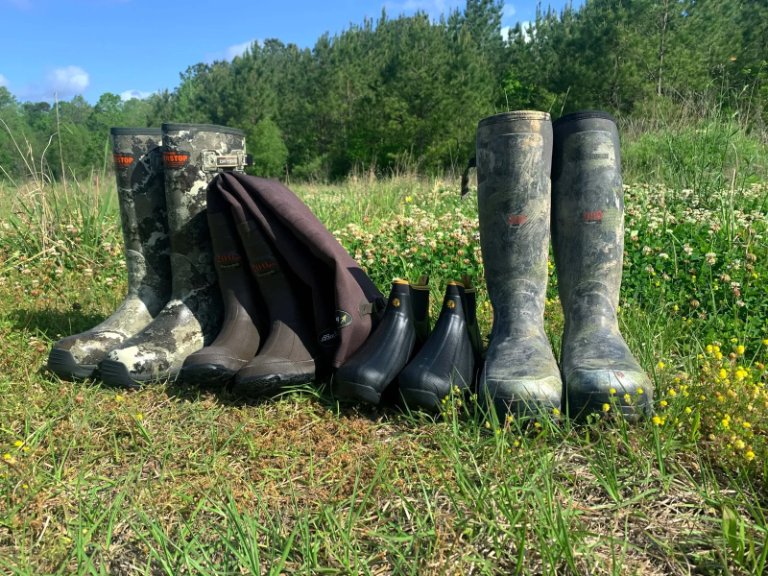
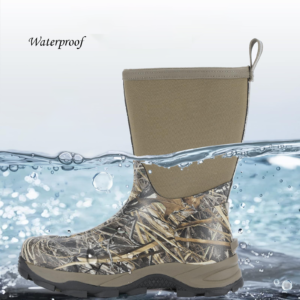
Natural‑rubber content, compound formulation, thickness, number of rubber components and reinforcement all affect material consumption and labor. A simple rubber boot and a hand‑built rubber‑neoprene hunting boot have very different production routes. Added foxing, toe guards, heel guards and multilayer overlays increase durability but also increase cutting, assembly and vulcanization work.
2. Neoprene Thickness and Lamination
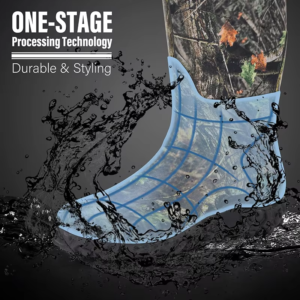
Neoprene thickness, foam density, stretch, textile lamination and surface treatment influence cost. Buyers should specify whether the goal is flexibility, warmth, scent control, abrasion resistance or a balanced general‑purpose construction. A higher nominal thickness does not automatically guarantee better performance if lamination and pattern design are poor.
3. Insulation Package
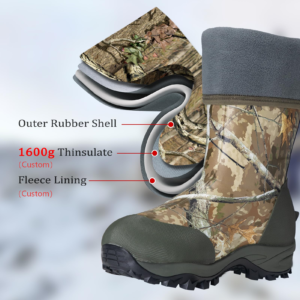
Insulation can be placed in the shaft, foot area, lining or removable components. The quoted gram weight must be defined carefully because suppliers may describe different constructions in different ways. Branded insulation, multilayer footbeds, reflective barriers and cold‑resistant components can increase cost. Temperature claims should be supported by an agreed test protocol rather than inferred from insulation weight alone.
4. Outsole and Midsole
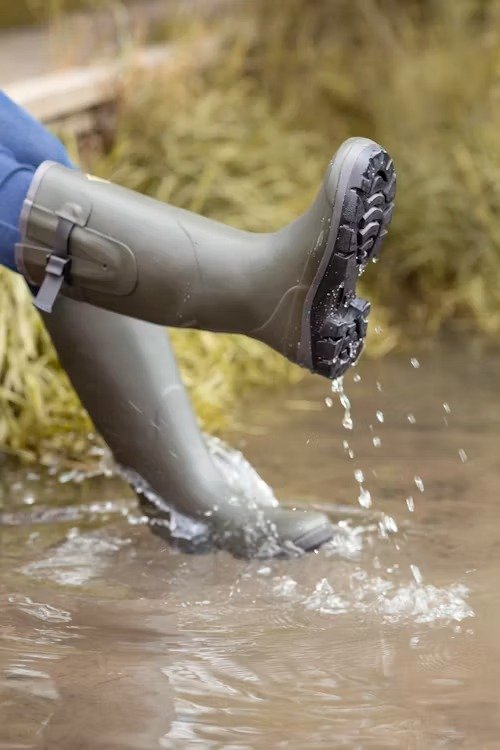
Outsole cost changes with compound, weight, lug depth, oil or slip resistance, midsole cushioning and whether an existing mold can be used. Deep self‑cleaning lugs for mud, a flatter deck‑style pattern and an aggressive snow outsole solve different problems. A proprietary outsole creates stronger brand differentiation but normally requires tooling and a larger commercial commitment.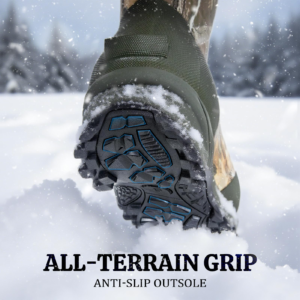
5. Lasts, Fit and Size Range
A wide size run, multiple widths or a market‑specific last adds development complexity. Fit corrections made after grading can require new molds or pattern adjustments. Buyers should provide the target gender, size system, calf fit, sock allowance and any wide‑width requirement before sampling.
6. Branding and Visual Customization
Common options include molded rubber logos, printed neoprene, woven labels, custom pull tabs, branded insoles, Pantone‑matched rubber and retail packaging. Existing components with customized colors and logos are usually more economical than a fully exclusive structure. Multiple colors can also split production volume and raise minimums.
7. Testing and Compliance
General outdoor hunting boots and certified occupational footwear do not follow the same compliance route. Costs may include restricted‑substance testing, physical‑performance testing, inspection, certification or market‑specific labeling. The buyer should state the destination, sales channel and intended claims at the quotation stage.
8. Order Quantity and Production Planning
MOQ is influenced by material minimums, color batches, molded components, printing setup, packaging and the number of sizes. A small order may be possible with existing molds and stock‑compatible materials, but a fully exclusive platform normally needs more volume to distribute development and tooling costs.
Existing Platform, Modified ODM or Full OEM?
| Development route | Typical changes | Commercial advantage | Main limitation |
| Existing platform | Logo, color, packaging | Fastest and lowest development risk | Less structural exclusivity |
| Modified ODM | Materials, pattern details, insulation, outsole option | Good balance of differentiation and cost | Some tooling or MOQ may apply |
| Full OEM | Exclusive last, upper, outsole and component system | Strongest product ownership and positioning | Highest development time, tooling and volume commitment |
What Does MOQ Really Mean?
A supplier’s headline MOQ is only the starting point. Confirm whether it applies per style, per color, per outsole, per upper material or across the total purchase order. Also confirm the minimum size quantity and whether special materials must be purchased in full rolls or batches. Hengrun Outdoor lists an MOQ starting from 500 pairs for selected hunting‑boot programs, subject to design, material and component requirements.
View Hengrun Outdoor hunting boot models and OEM options
Tooling Costs Buyers Should Expect
- Lasts: the three‑dimensional fit foundation, usually required across the size run.
- Outsole molds: often the largest tooling item for an exclusive bottom design.
- Rubber‑component or logo molds: used for badges, overlays or branded elements.
- Cutting dies and patterns: needed for neoprene, lining and reinforcement components.
- Print screens, plates or digital artwork setup: dependent on the decoration method.
- Packaging tooling: custom box dies, inserts, labels or display components.
Ask whether tooling is refundable against volume, who owns it, how long it will be stored, whether maintenance is included and whether it may be used for another customer. These points should be written into the development agreement.
How to Request an Accurate Hunting Boot Quote
- Share reference images or a physical sample and clearly identify which details must be matched.
- State the destination market, customer type and intended retail price range.
- Define the height, construction, rubber coverage, neoprene thickness and insulation concept.
- Provide the size run, width requirement, color count and estimated quantity per color.
- Specify outsole terrain, slip expectations and any required laboratory tests.
- List branding, packaging, labeling, barcode and carton requirements.
- Confirm the target delivery window and Incoterm, such as FOB or CIF.
How to Compare Quotations Fairly
Create a specification comparison sheet before choosing a supplier. Confirm that every quote uses the same material, construction, size range, packaging and test scope. A lower offer may exclude tooling, use a lighter outsole, reduce rubber coverage, substitute insulation or assume generic packaging. Request a costed alternative only after the baseline specification is aligned.
Frequently Asked Questions
Can I start with 500 pairs?
Selected existing or modified platforms may start around 500 pairs, but feasibility depends on color, size breakdown, material minimums and customization. A full proprietary outsole and last typically require a larger commitment.
How long does custom development take?
Timing depends on whether existing molds are used, how many sample rounds are required and whether testing is needed. The development calendar should separate design confirmation, tooling, samples, wear testing, final approval and mass production.
Can the supplier copy a famous brand’s boot?
A supplier can develop products from functional requirements and market references, but buyers should avoid protected logos, patented elements and confusingly similar designs. Original product development creates safer and more durable brand value.
Build a Cost‑Effective Private‑Label Hunting Boot
Hengrun Outdoor provides OEM and ODM support for rubber and neoprene hunting boots, including insulation options, outsole selection, camouflage, logo development, size grading and packaging. Send your technical brief and expected volume to receive a project‑specific recommendation rather than an unreliable generic price.
CTA: Request a custom hunting boot quotation
See Hengrun Outdoor manufacturing capabilities