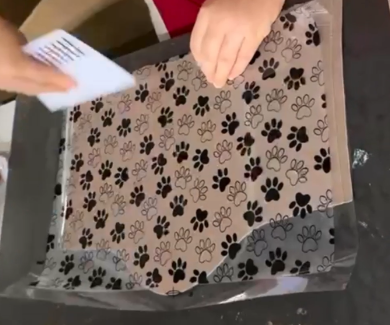
Heat Transfer Printing for Rubber Boot Uppers: Full Workflow From Artwork Design to Finished Upper
Custom graphics on rubber boots are in growing demand for hunting, outdoor, industrial workwear and lifestyle footwear brands. Screen printing struggles with fine camouflage details, gradient colors and consistent repeat patterns on elastic rubber substrates. Heat transfer with sleeve surface coating solves these pain points, delivering crisp, stretch-resistant prints that bend with rubber during boot forming.
In this guide, we break down the complete production workflow step by step. We start from artwork design and prepress, all the way through transfer printing, die cutting based on shoe lasts, and final upper assembly. This process is widely used when we manufacture custom rubber hunting boots and OEM rain boots for global buyers.
1.What Is Heat Transfer with Sleeve Surface Coating for Rubber Uppers?
This is a decorative transfer process exclusive to rubber footwear components. Instead of printing ink directly onto raw rubber, the pattern is first printed onto special release transfer paper. The plain rubber sheet receives a formulated sleeve coating as an adhesive bridge layer. Under calibrated heat and pressure, the graphic ink layer transfers from the paper and bonds permanently to the coated rubber surface.
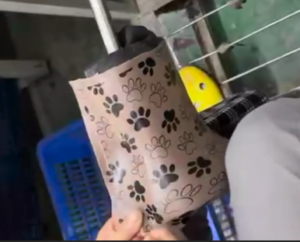
After transfer, the patterned rubber sheet is trimmed according to the unfolded contour of the shoe last. These cut rubber panels are then shaped and assembled into the full boot upper.
Compared to traditional screen printing, this method supports intricate camouflage, small logos, seamless repeats and low-minimum custom orders. Finished prints resist peeling and cracking when the rubber stretches over curved last surfaces.
Stage 1: Artwork Design & Prepress Preparation
1.1 Pattern Brief & Vector Design
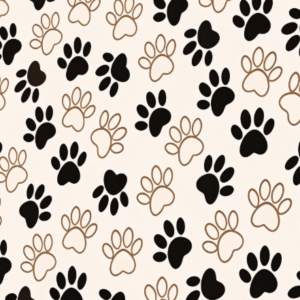
Every reliable heat transfer job begins with artwork development. Our design team works from the brand’s pattern specification, whether it is woodland camouflage, brand logo, graphic print or seasonal artwork.
Key parameters locked in this phase:
- Seamless pattern repeat dimension
- Pantone color matching target
- Rubber shrinkage compensation allowance
- Safe bleed margin for later trimming and forming
- Minimum line thickness to avoid blur during heat pressing
Rubber expands and shrinks during heat processing and vulcanization. If shrinkage offset is ignored at the design stage, logos and camouflage patterns will shift after forming.
1.2 Prepress & Transfer Paper Output
Once the customer approves the digital proof, the file moves to prepress. Color separation and registration marks are added for mass production. The artwork is then printed onto release transfer paper. The release coating on this paper ensures clean ink separation when heat is applied.
Poor prepress is the top cause of production defects: ghosting, partial transfer, broken fine lines and inconsistent pattern alignment.
Stage 2: Rubber Sheet Preparation & Sleeve Surface Coating
While transfer paper is printed, solid-color raw rubber sheets are prepared. The rubber surface is cleaned to remove release agent, dust and oil contamination. Contamination will block ink adhesion and lead to print lifting.
A thin, uniform sleeve coating is applied to the rubber surface. This coating is the critical bonding medium between the non-porous rubber and the heat transfer ink.
- Too thin coating → weak adhesion, print peels off after flexing
- Over-applied coating → bubbles, loss of graphic sharpness
Coated rubber sheets go through controlled curing time before entering the heat transfer press. We hold strict surface tension checks before production, especially for orders of OEM & ODM rubber rain boots.
Stage 3: Heat Transfer Pressing: Transfer Graphics Onto Rubber
This is the core converting station. Operators align the printed transfer paper onto the pre-coated rubber sheet using registration marks. Consistency in positioning directly controls where logos or camouflage features land on the finished boot vamp and shaft.
Three process variables are locked and logged for each batch:
- Heat temperature
- Closing pressure of the press
- Dwell pressing time
When conditions are correct, the ink layer melts and fuses with the sleeve coating. After pressing, the paper liner is peeled away to reveal the graphic embedded on the rubber surface.
Inline QC inspects every sheet immediately. Reject criteria include missing print areas, air bubbles, color deviation, blurred edges and incomplete transfer. Faulty sheets are filtered out before cutting to reduce waste downstream.
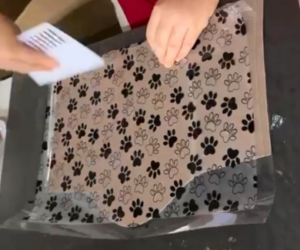
Stage 4: Last-Based Trimming of Patterned Rubber Sheets
A full printed rubber sheet is not yet a boot upper. All upper outlines are derived from the shoe last — the master mold that defines boot height, toe shape, ankle curve and overall fit.
Our tooling team creates cutting dies or digital cutting templates from the 2D unfolded development of the shoe last. The die shape matches the exact upper panel layout.
During trimming, operators maintain pattern positioning control. For camouflage hunting boots, matching the pattern flow across left and right boots is a mandatory check item. Excess rubber flash is removed, and cut edges are cleaned smooth.
Stage 5: Forming & Assembly Into Complete Rubber Boot Upper
The trimmed patterned rubber panels proceed to forming. The rubber pieces are wrapped and stretched tightly around the shoe last to follow the boot’s 3D contour. Multiple upper segments are joined and sealed to build the full vamp and shaft structure.
This step is the ultimate test for the heat transfer print. Rubber stretches heavily over the toe box and ankle curve. A well-formulated sleeve coating + ink system will stay intact without cracking. Low-grade transfer prints often fail here, showing fine cracks on high-stretch zones.
2.Core Benefits of Sleeve-Coated Heat Transfer for Rubber Uppers
- High graphic resolution: Supports complex camouflage, gradients and tiny logo details
- Flexible order volume: Suitable for custom small MOQ and mass bulk production
- Stretch-resistant prints: Designed to survive rubber forming over shoe lasts
- Excellent batch-to-batch color consistency
- Smooth hand feel, no heavy raised texture typical of thick screen print
- Compatible with hunting boots, farm work rubber boots, kids rain boots and fashion rubber footwear
3.Common Defects & Quality Control Checklist
- Print peeling: Caused by insufficient coating, surface contamination or wrong heat parameters
- Pattern distortion: Solve by adding shrinkage compensation in the artwork phase
- Ink cracking on curved areas: Complete stretch test on the actual last before mass run
- Color drifting: Stabilize curing environment and reference Pantone swatches
- Left-right pattern mismatch: Standardize registration marks and cutting die positioning
4.Final Takeaway
Heat transfer printing with sleeve surface coating is a sophisticated chain connecting graphic design, chemistry of rubber coating, thermal conversion and shoe last development. Every stage must be coordinated between design, prepress, press, cutting and QC teams.
For sourcing managers and footwear brand owners, choosing a manufacturer that controls the full in-house workflow greatly reduces sample delay and mass production quality risk. If you are looking for custom printed rubber boot uppers and finished rubber boots, contact our team for artwork review and sample development.