Introduction
Hunting boots are more than just footwear—they are a critical piece of gear that can make or break a hunter’s experience. In the global hunting footwear market, rubber-outsole and neoprene-lined boots have emerged as the gold standard for durability, comfort, and all-weather performance.
For B2B buyers—whether you run a hunting gear brand, a outdoor retail chain, or a procurement firm—understanding the demand behind high-volume search terms like hunting boots for men, hunting boots waterproof, hunting boots for women, and hunting boots insulated is essential. But what truly sets successful businesses apart is the ability to offer custom-designed boots that meet the exact needs of your target customers.
In this guide, we’ll explore the hottest trends in rubber-neoprene hunting boots and show you how OEM/ODM partnerships can help you launch a winning product line.
Why Rubber & Neoprene Dominate the Hunting Boot Market
Before diving into specific categories, let’s look at why rubber (outsole & upper) combined with neoprene (inner lining) has become the preferred construction for serious hunters.
| Feature | Benefit |
|---|---|
| Rubber shell | 100% waterproof, puncture-resistant, easy to clean |
| Neoprene lining | Insulates even when wet, flexible, breathable |
| Rubber outsole | Aggressive traction on mud, snow, and rocky terrain |
| Seamless construction | No stitching means zero water entry points |
For B2B buyers, this material combination offers high durability and low warranty claims—a win-win for both you and your end customers.
Top 5 High-Demand Hunting Boot Categories (Backed by Search Data)
Based on thousands of monthly searches, here are the most sought-after hunting boot types. Each represents a clear opportunity for custom manufacturing.
1. Hunting Boots for Men
Men remain the largest demographic in hunting footwear. However, “one-size-fits-all” no longer works. Today’s male hunters want boots that balance aggressiveness with all-day comfort.
Customization opportunities for B2B:
-
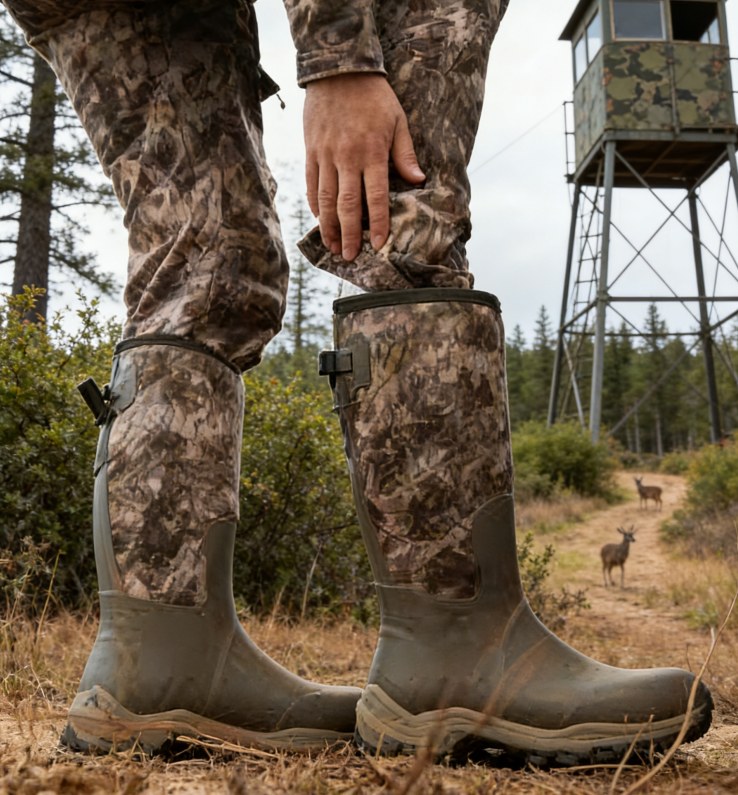
Adjustable calf widths (for different leg sizes)
-
Mossy Oak or Realtree camouflage patterns
-
Reinforced toe and heel caps for extra durability
-
Scent-free rubber compounds for stealth hunting
Pro tip: Offer men’s boots in both 7mm and 3.5mm neoprene thicknesses—the former for deep winter, the latter for early season.
2. Hunting Boots for Women
The women’s hunting market is growing rapidly, yet many brands still offer “shrunken men’s boots.” Female hunters demand boots designed for narrower heels, higher arches, and lower calf volumes.
Customization opportunities:
-
Anatomically correct lasts (foot forms)
-
Lighter overall weight (less fatigue)
-
Feminine color accents or camo variants
-
Shorter shaft heights (14–15 inches instead of 16–18)
Market insight: Searches for hunting boots for women spike in Q3 (pre-season). Stocking custom women’s lines gives you a first-mover advantage.
3. Waterproof Hunting Boots (100% Reliable)
Waterproofing is non-negotiable. With a rubber shell and neoprene lining, true waterproof performance comes from seamless molding and purple-label grade rubber.
Key B2B specifications to highlight:
-
Hydrostatic head testing (e.g., >20,000mm)
-
Wrapping rubber up over the toe (not just glued)
-
Rubber thickness options: 3mm (light), 5mm (standard), 7mm (arctic)
Search trend: Hunting boots waterproof is often paired with “mud,” “swamp,” and “rice field” – indicating a need for tall, slip-on rubber boots.
4. Insulated Hunting Boots
Insulation is measured by neoprene thickness (mm) and sometimes added fleece or wool. The right insulation level depends entirely on the hunting environment.
| Neoprene Thickness | Recommended Temperature Range | Best For |
|---|---|---|
| 3mm | 40°F to 70°F (4°C–21°C) | Early season, turkey hunting |
| 5mm | 10°F to 40°F (-12°C–4°C) | Deer hunting, late season |
| 7mm | -20°F to 10°F (-29°C to -12°C) | Ice fishing, arctic hunting |
Custom insulation features:
-
Removable insulated liners (easy drying)
-
Reflective heat shield layers
-
Antimicrobial treatment to prevent odor
5. All-Purpose Hunting Boots (Unisex/Multi-terrain)
Beyond gender-specific and weather-specific designs, many retailers seek a core SKU that appeals to the widest audience. This boot typically features:
-
5mm neoprene (versatile)
-
Mossy Oak Break-Up Country camo
-
16” shaft height
-
Steel or composite shank for arch support
B2B advantage: A single custom mold for this “workhorse” boot can serve men, women, and youth with slight size range adjustments.
Why B2B Buyers Should Choose Custom Manufacturing
Offering stock boots from a catalog limits your brand’s uniqueness. With custom rubber-neoprene hunting boots, you can:
✅ Control Quality & Materials
From rubber shore hardness (60A–70A) to neoprene density, you decide every component.
✅ Differentiate Your Brand
Add your logo, custom camo patterns, color trims, and even specialized outsoles (e.g., Michelin rubber compound).
✅ Solve Specific Pain Points
-
Scent control: Add carbon-infused neoprene.
-
Briar protection: Use thicker rubber overlays.
-
Easy on/off: Molded pull-tabs and stretch-fit neoprene tops.
✅ Improve Margins
Direct factory pricing eliminates middlemen. Typical B2B margins on custom hunting boots range from 40–60%.
How to Start Your Custom Hunting Boot Project (Step by Step)
Working with an experienced OEM manufacturer involves a straightforward process:
-
Define Your Target User – Men? Women? Both? What climate? What game animal (deer, waterfowl, upland bird)?
-
Select Base Specifications – Shaft height, neoprene thickness, outsole pattern, camo type.
-
Review Samples – Factory produces 2–3 sample pairs for fit and function testing.
-
Approve Mass Production – MOQ typically starts at 500–1000 pairs per design/colorway.
-
Private Label Shipping – Boots arrive in your custom boxes, ready for your sales channels.
Lead time: Sample development: 20–30 days. Mass production (e.g., 3000 pairs): 45–60 days.
Key Features to Highlight in Your Custom Hunting Boots
When presenting your product line to retailers or end consumers, emphasize these selling points:
| Feature | Why It Matters |
|---|---|
| 100% waterproof rubber shell | No wet feet, even standing in creeks |
| Neoprene core insulation | Warmth without bulk |
| Aggressive self-cleaning outsole | Mud releases easily |
| Reinforced instep & heel | Resists wear from climbing stands |
| Scent-free rubber | Won’t alert deer or elk |
| Adjustable gusset | Fits over thick hunting pants |
Frequently Asked Questions (B2B)
Q1: What is the typical MOQ for custom hunting boots?
A: MOQ ranges from 500 to 2000 pairs per SKU (size run: US 7–14). For full-camo custom molds, expect 1000+.
Q2: Can you make left and right asymmetrical lasts?
A: Yes. Premium hunting boots use left/right-specific lasts for better arch support and toe spring.
Q3: Do you offer eco-friendly materials?
A: Many factories now offer recycled rubber outsoles and plant-based neoprene (limestone-derived). Ask your OEM partner.
Q4: How do I protect my custom design?
A: Sign a non-disclosure agreement (NDA) and register your outsole pattern or camo print where applicable.
Conclusion: Build Your Hunting Boot Brand with Confidence
The search data doesn’t lie—hunting boots, men’s hunting boots, women’s hunting boots, waterproof hunting boots, and insulated hunting boots represent consistent, high-intent demand. But generic imports won’t build loyalty. Custom rubber and neoprene hunting boots let you offer superior fit, performance, and brand identity.
📦 Ready to discuss your custom hunting boot project? Contact our B2B team today for a free consultation, material samples, and MOQ pricing.