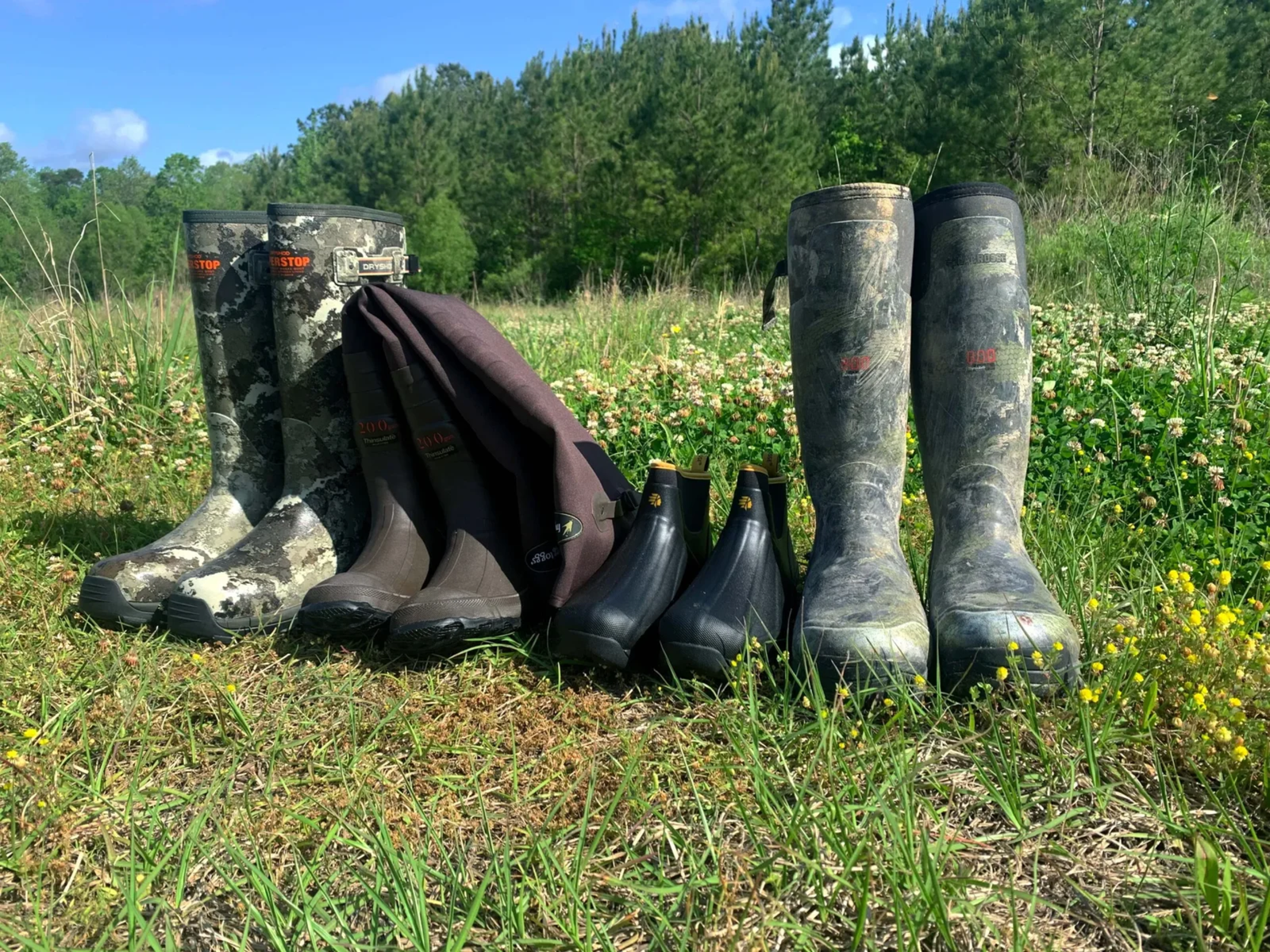
Why the Right Hunting Boots Are Your Most Important Piece of Gear
A successful hunt doesn’t start with a perfect shot; it starts with a silent, stable, and comfortable step. Your hunting boots are the critical interface between you and the wilderness. The wrong pair can lead to blisters, fatigue, cold feet, and sprained ankles—ruining your trip and potentially putting you in danger. With countless options featuring terms like “insulation,” “GORE-TEX,” and “support,” choosing can be overwhelming.
This definitive guide cuts through the marketing jargon. We’ll walk you through the five essential factors to consider: Terrain, Season, Material & Construction, Fit & Support, and Budget. By the end, you’ll know exactly how to select the hunting boots that match your specific needs.
Chapter 1: Match Your Boot to Your Terrain – Where Will You Hunt?
The ground under your feet dictates your primary boot requirement.
-
Swamps, Marshes & Wetlands:
-
Priority: Ultimate Waterproofing & Height.
-
Look For: Knee-high or at least 16-inch boots. Full rubber boots (like those from Lacrosse) or premium waterproof leather/fabric boots with sealed seams (e.g., with GORE-TEX) are essential. Agile soles are less critical here.
-
-
Rocky Mountains & Steep Hills:
-
Priority: Ankle Support & Aggressive Traction.
-
Look For: Sturdy, high-cut (8-10 inch) boots with robust ankle support. Vibram® or similar deep-lugged soles are crucial for grip on loose rock and inclines. Stiff shanks provide stability on uneven ground.
-
-
Forests, Farmland & General Mixed Terrain:
-
Priority: Balance, Comfort & Versatility.
-
Look For: Mid-cut (6-8 inch) boots offering a good mix of support and mobility. Focus on durable uppers (full-grain leather or tough nylon) and a versatile tread pattern. This is the most common and versatile hunting boot category.
-
Chapter 2: Choose for the Season – Understanding Insulation & Breathability
Temperature regulation is key to comfort and safety.
-
Warm Weather (Early Season):
-
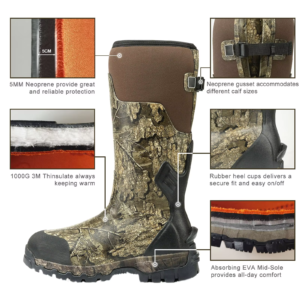
Insulation: 0-400 grams. Often uninsulated or lightly insulated. The goal is breathability to wick sweat and keep feet cool.
-
Key Feature: Moisture-wicking liners and ventilation options.
-
-
Cool/Cold Weather (Late Season):
-
Insulation: 400-1000 grams. Thinsulate™ is the industry standard. Provides warmth without excessive bulk.
-
Pro Tip: Wool socks are n
on-negotiable. They retain heat even when wet.
-
-
Extreme Cold & Sit Hunting:
-
Insulation: 1000+ grams. For sub-freezing te
mperatures, especially when stationary. Can be bulky for long walks.
-
Alternative: Consider pac boots with removable felt liners, offering extreme warmth and the ability to dry liners separately.
-
Related Article: For a deep dive, read our specialized guide: Winter Hunting Boots: The Truth About Insulation Ratings & Technology.
Chapter 3: Materials & Construction – Decoding Durability & Weatherproofing
-
Upper Materials:
-
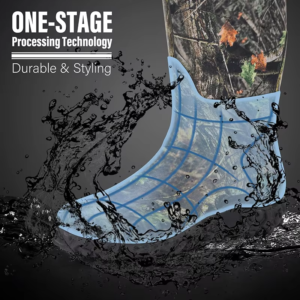
Rubber: 100% waterproof, easy to clean. Best for wet environments but lacks breathability.
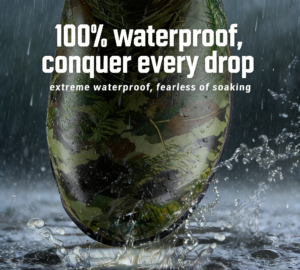
waterproof rubber upper
-
-
Waterproof & Breathable Membranes:
-
GORE-TEX: The gold standard. Highly waterproof and breathable. Look for “GORE-TEX” branding on the boot.
-
Other Membranes: Many brands (like Danner’s “Dry waterproofing”) have proprietary systems that perform very well, often at a better value.
-
-
The Sole Unit:
-
Outsole: Look for quality rubber compounds (e.g., Vibram) with deep, multi-directional lugs for traction.
-
Midsole/Shank: Provides cushioning and torsional rigidity. A nylon or steel shank prevents flex on uneven ground, reducing foot fatigue.
-
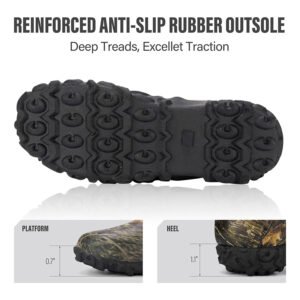
Anti Slip Outsole
-
Chapter 4: The Non-Negotiables – Fit, Comfort & Break-In
A perfect fit is more important than any technology.
-
Fit Session: Try on boots in the afternoon with the socks you’ll hunt in. Your feet swell during the day and activity.
-
The Thumb Test: With the boot laced up and your foot forward, you should have about a thumb’s width of space (approx. 1 inch) between your longest toe and the boot’s end.
-
Heel Lock: Your heel should be snug, with minimal vertical slippage when walking.
-
The Break-In: Never wear new boots on a hunt. Wear them for short walks, yard work, or around the house for 1-2 weeks to mold them to your feet and soften materials.
Related Article: Avoid the misery of blisters with our detailed guide: The Science of Fit: How to Ensure Your Hunting Boots Fit Perfectly.
Chapter 5: Balancing Features with Budget – Making the Smart Investment
-
Budget Tier (< $150): Focus on solid basic construction and brand reputation. Compromises may be made on premium materials or advanced waterproofing.
-
Mid-Range ($150 – $300): The sweet spot for most hunters. Here you find reliable waterproofing (often GORE-TEX), good insulation, and durable construction from reputable brands.
-
Premium Tier ($300+): Top-tier materials (e.g., premium leather), cutting-edge lightweight designs, specialized technologies, and often handmade construction (like Danner’s USA-made line). For serious hunters who demand the best.
To see our top picks in each category, check out our detailed roundup: 5 Best Mid-Range Hunting Boots for Mixed Terrain: A 2024 Comparison.
Conclusion: Your Path to the Perfect Pair
Choosing your hunting boots isn’t about finding the “best” boot overall, but the best boot for you. Start by honestly assessing your primary terrain and season. Let that guide your requirements for height, insulation, and waterproofing. Then, invest time in getting the perfect fit. Finally, match these needs to a trusted brand within your budget.
Remember, a great pair of hunting boots is an investment in your success, safety, and enjoyment in the field. They should be the piece of gear you never have to think about once you start your stalk.
Ready to explore specific brands and models? Use the knowledge from this guide to browse our curated selection of hunting boots, filtered by the features that matter most to you.